Joy of St Croix
Tub Repair and More
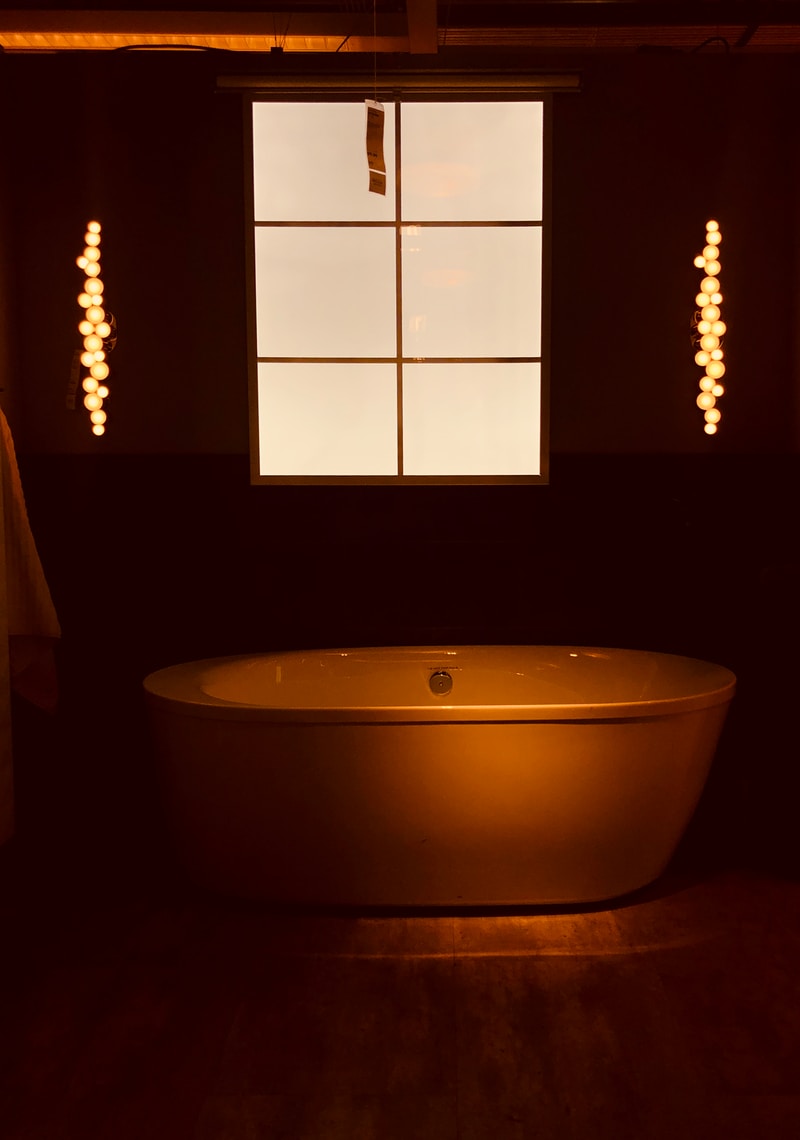
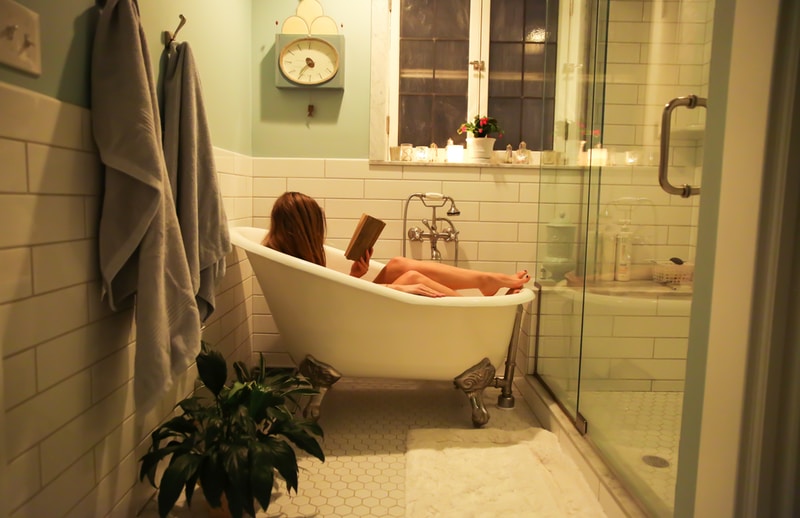
Clawfoot Bathtub
Restoration
Don't just furnish a room
Define it
Nothing matches the versatile design appeal of a clawfoot bathtub
No matter how your tastes or needs guide your design style, the clean organic lines of a clawfoot bathtub can elegantly and effortlessly lend themselves to your creativity. From custom colour matching and Art work to specialty finishes and custom design, Joy of St Croix's Art Team will help you create a durable and beautifully defining element for your design.
Restoration of an antique clawfoot bathtub is more than a simple refinishing project in Joy of St Croix's Art Studio - it's a work of Art...and you're not just another refinishing customer - you're a patron of the Arts. Whether you're simply reglazing the interior for lead containment or fully refinishing the interior, exterior, and the feet, you will receive the same attention to quality that a commissioned Art project would receive.
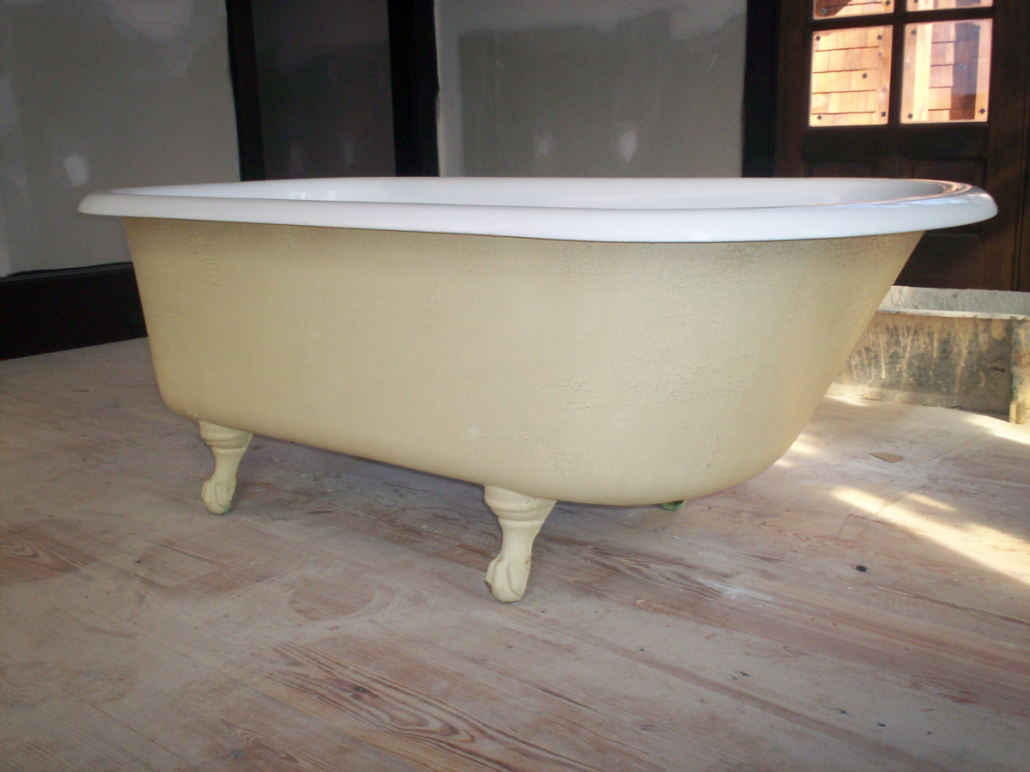
A full clawfoot bathtub restoration has an average turn-around time in the studio of 2 -3 weeks to strip and refinish both the interior and exterior of a standard 5 foot tub and coat the feet.
Why do bathtubs have feet?
Claw feet on bathtubs is because of furniture design. In 18th century France a new school in the Art and Design movements was introducing an ancient Grecian design - the cabriole leg.
Around this time the Industrial Revolution was producing the indoor plumbing industry but germ theory won't occur to Pasteur until 1850's. So, at the time, pursuing hygiene was more a fashion statement then a necessity. This new addition to the home was considered to be a piece of furniture and being the trend at the time on furniture, the exteriors and the legs were adorned with the latest styles.
By the time that and began to be mass produced at the turn of the 20th century.
They are now a collector's item.
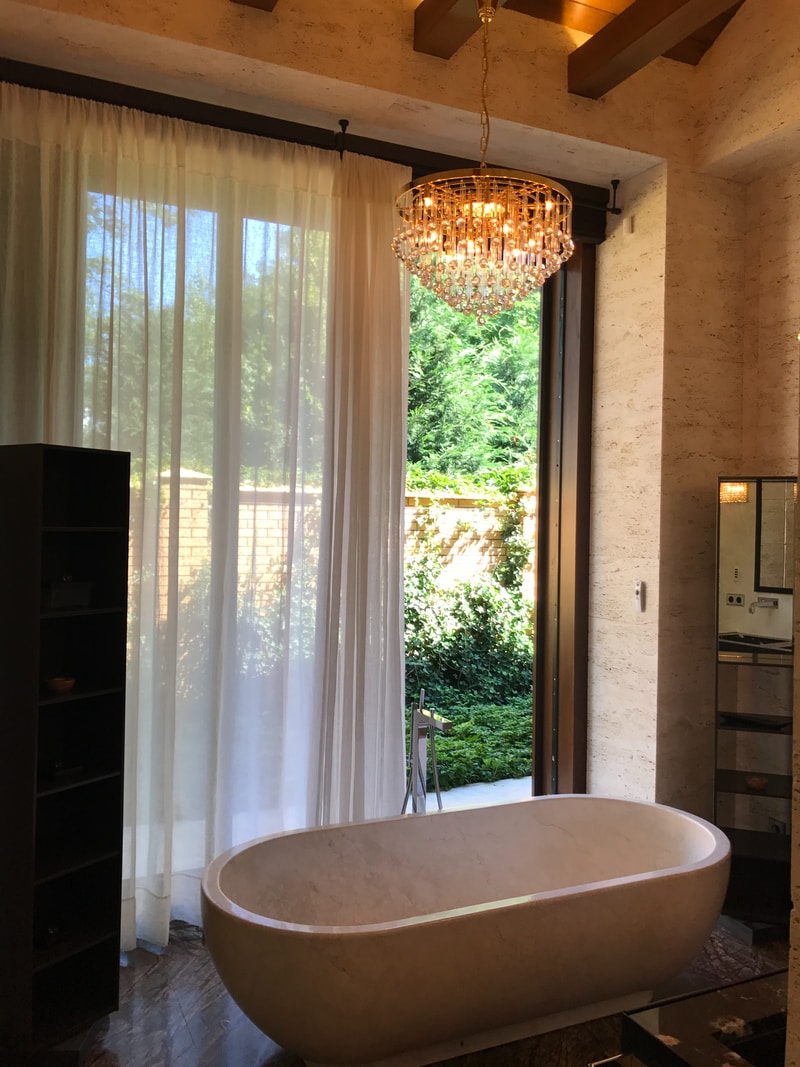
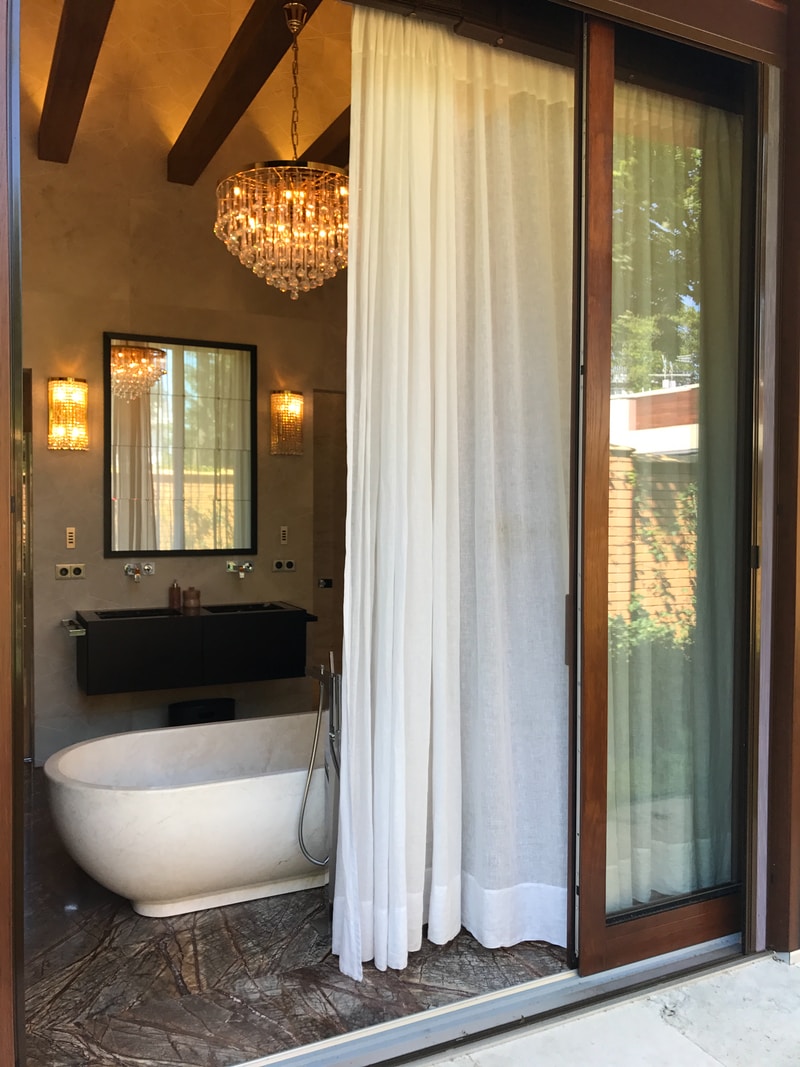
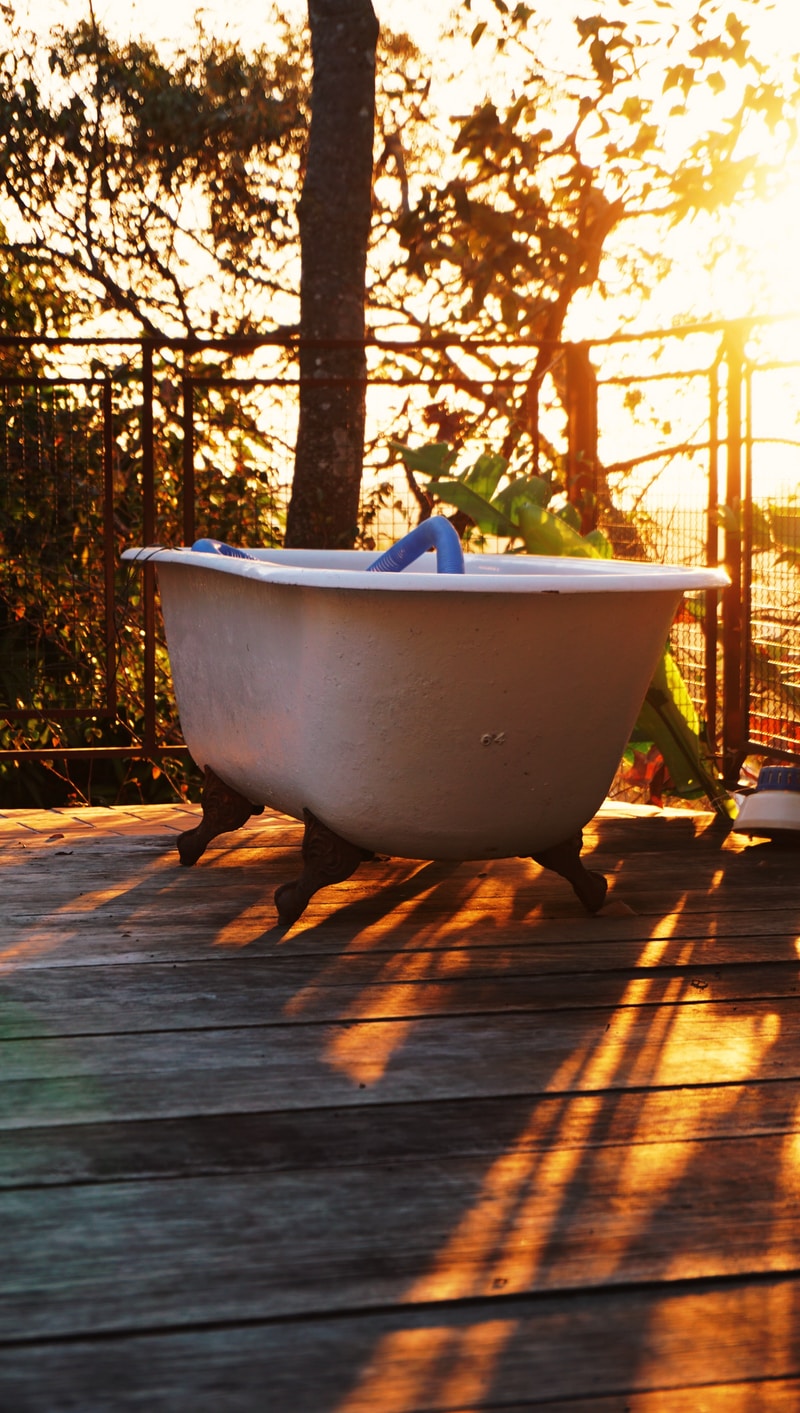



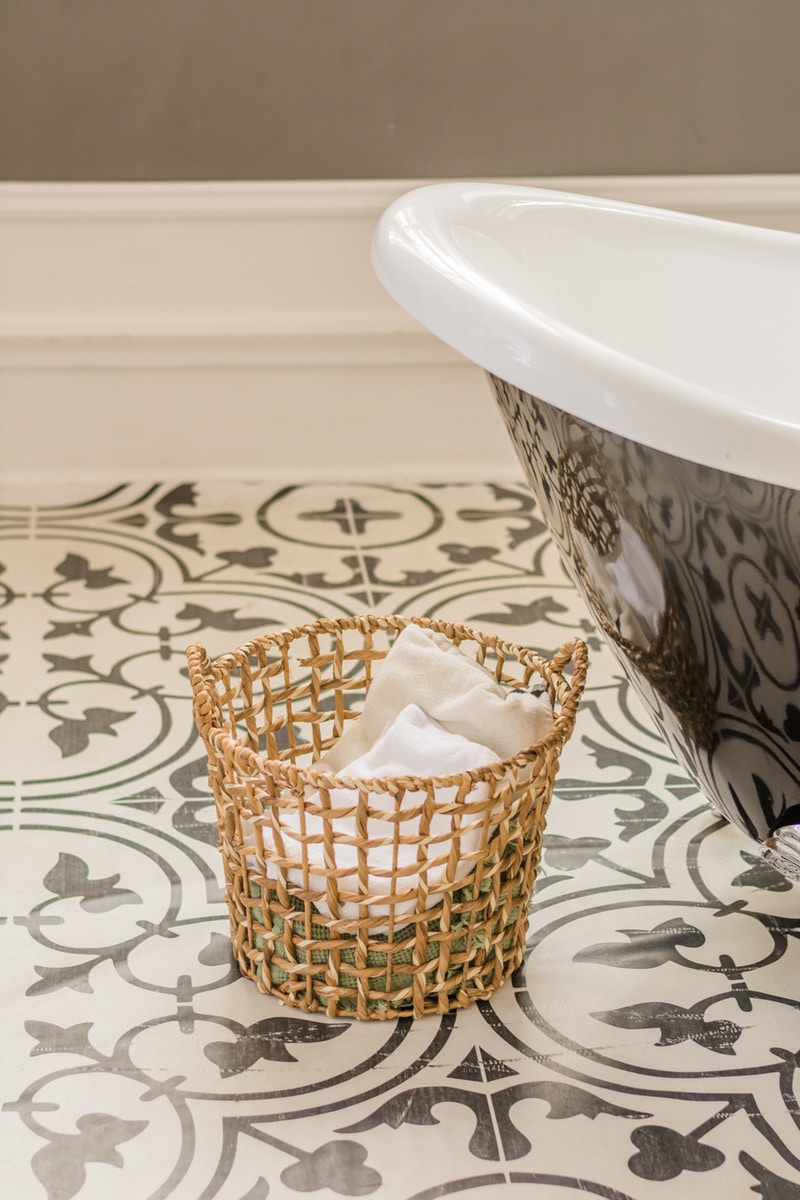
The 4 separate services in clawfoot bathtub restoration
Separate refinishing services have separate charges
Each service item takes studio time, skilled labour, material resources, and management to perform. The average turn-around time in the studio to strip and refinish both the interior and exterior of a standard 5 foot tub and paint the feet is 2 -3 weeks.
That's four separate projects:
Strip the paint,
Refinish the interior,
Refinish the exterior, and
Refinish the feet.
Click on the images below to find the current standard prices for each service in the SHOP.
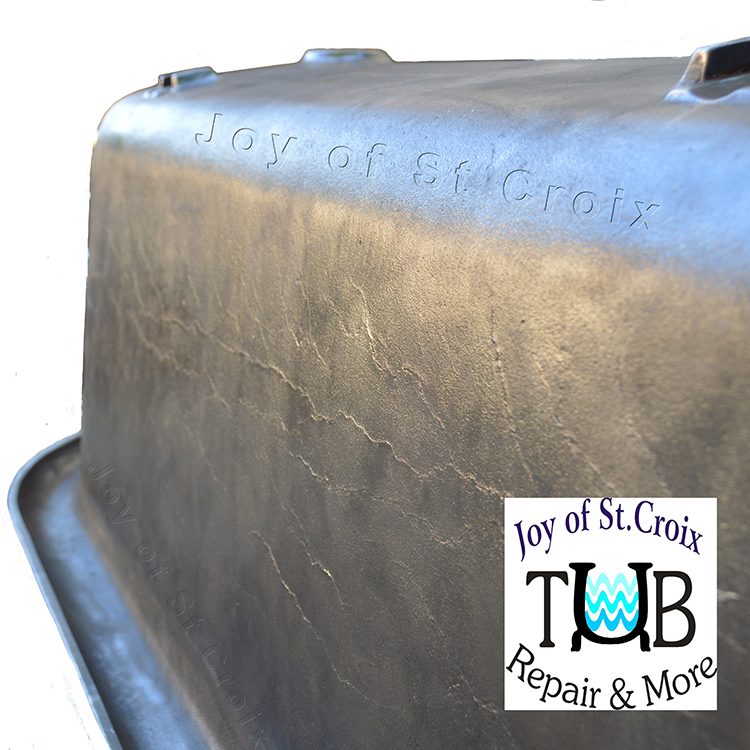
Refinishing the exterior surface
The exterior finish is typically under-valued in the approach to its application and too often quality is sacrificed in exchange for a lower price.
Quality, in this case, is defined by the durability and longevity of the coating system. The primary requirement for all coating systems is a chemically clean and physically solid surface for long term adhesion. To that end, all existing coatings need to be removed and the cast iron chemically treated for rust abatement.
Joy of St Croix offers three different exterior design options in our standard full restoration of clawfoot bathtubs.
Scuro, Chiaro, Sprezzatura, and Monotona. All of them involve sandblasting, applying Duratec, and fairing with the same attention as the interior.
Custom colours, patterns, and Art work are available at additional costs and require a studio consultation.
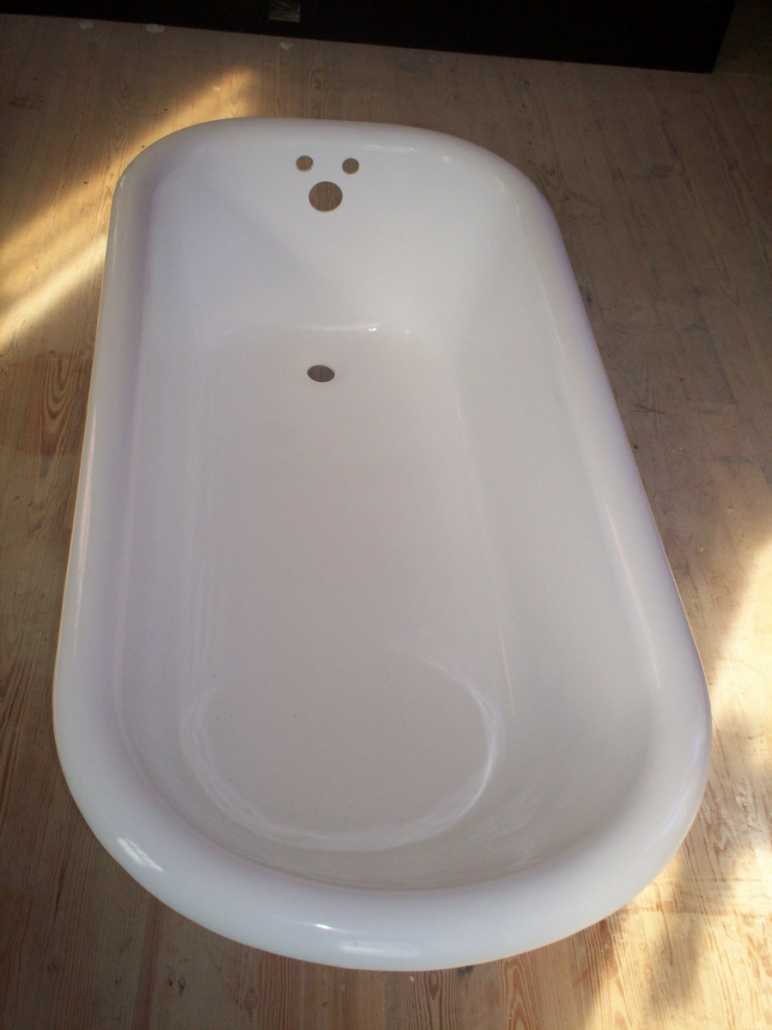
Refinishing the interior surface
The final finish mirrors what's underneath it. If the porcelain is rough and pitted, like almost every antique bathtub is, the final finish will be, too. Our process starts with etching the porcelain to remove deeply ingrained contaminants and provide a reliable mechanical adhesion. The drain area, the overflow and faucet holes, and the rolled rim's edge is ground to the metal, thus aggressively removing rust and to provide a solid foundation for these critical areas. The first layer of the coating is a Duratec vinylester primer which is remarkably dense - so much so that when fully cured it can be tapped and died (i.e. it can be threaded to receive a machine screw). All of the ground areas in addition to chips, gouges, and rough porcelain are filled in by the Duratec primer without any fairing agent between the foundation coating and the substrate. The shaping process now begins with sanding and fairing the Duratec to sculpt the rolled rim and the interior curves that will eventually result in an unbroken reflection in the final finish.
In the next stage an epoxy primer is applied that will provide a proper adhesion of the acrylic urethane color top coat. The epoxy primer is sanded and inspected for any final fairing and the first of the color coats is applied.
The acrylic urethane topcoat requires a specific thickness, both for its mechanical and cosmetic performance. The topcoat is sanded and a light cursory polish affected to determine if any area requires more sculpting and fairing to produce the unbroken reflection that truly highlights the organic curves. This step is usually repeated 2 or 3 times before the unit is regarded as ready for the clear coat.
No one stage is more critical than another in regards to the final cosmetics, but the clear coat is arguably the most nerve wracking and skill intense. It may seem simple, but the clear coat reveals and highlights the surface of the topcoat and can even cast shadows of its own surface that will confound the eye. It must be free of any debris and of uniform thickness.
The final result is a deep mirror shine to the uniquely distinctive organic curves and lines that make the clawfoot bathtub an icon of bath design.
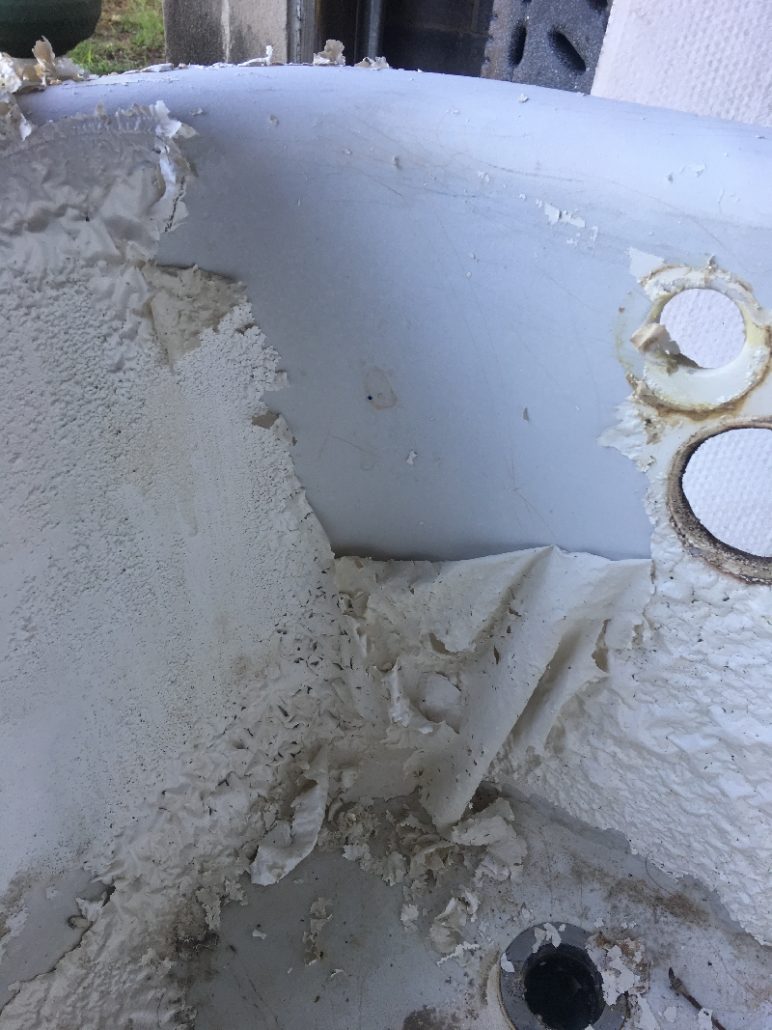
Stripping off the old paint
Everything has a lifespan and when paint begins to fail it's the best policy to remove it completely and start from scratch. Porcelain is porous which is why it has to have a glaze to prevent water from getting to the cast iron where it will rust and push the porcelain off . That old decaying and failing paint is in those pores and needs to come out so the new coating can take its place and adhere to the porcelain. The exterior of some bathtubs may have paint from 50 - 100 years ago that contains high quantities of lead - proper removal and disposal methods including fresh air systems and chemical burn safety training is employed at the studio and on the field.
The feet on a bathtub are the defining element of clawfoot bathtubs
A clawfoot bathtub is a creation of furniture design, and attention to this can be uniquely rewarding.
The feet can be the same colour as the exterior or as subtle or bold a contrast as your design dictates. Custom finishes, patterns, and Art work are available at additional costs and usually require a studio consultation.
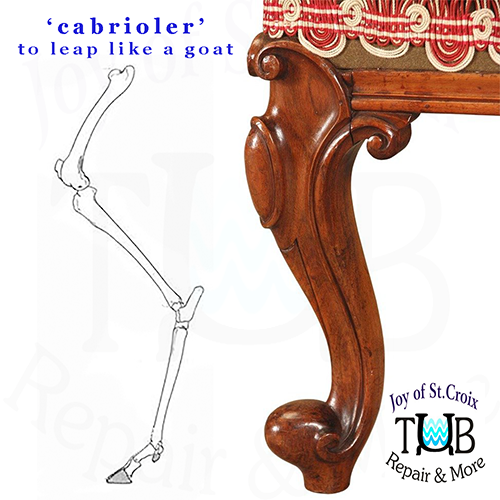
The cabriole leg
A cabriole leg is one of (usually) four vertical supports of a piece of furniture shaped in two curves; the upper arc is convex and always bows outward, while lower is concave and bows inward.
The cabriole leg style is found in the frescoes of Ancient Greece and the paintings of Ancient China. The design is inspired by the rear leg of hoofed animals. The etymology of this term specifically derives from the French word cabrioler, meaning to leap like a goat.
Identify the Style
The graceful curves of a cabriole leg are easy to love. What's decidedly more difficult is identifying the many styles within this broad genre of design. While all interpretations share a signature shape composed of two gently opposing arches, each style retains some signature element that makes the cabriole all its own. Follow some designer tips to readily identify four of the most popular variations of this timeless furniture classic.
Queen Anne Style:
Queen Anne cabriole legs commonly have a thinner ankle and a simple, pad-style foot. While occasionally seen without any embellishment, traditional shell motifs are typically found at the top of Queen Anne cabriole legs.
Chippendale Style:
The Chippendale is most often identifiable through the appearance of heavy, substantial proportions and a large, prominent weighty ball-and-claw foot.
Louis XV Style:
The Louis XV style of cabriole leg is identifiable by intricate carvings and detail, a shorter leg, and with the opposing curves nearly identical in proportion. The foot of Louis XV cabriole legs traditionally ends with an elaborate drake foot on a small bun.
Colonial Style
Most closely related to Queen Anne style, Colonial cabriole legs are thin and delicate in proportion. Usually free from embellishments or carvings, the long graceful legs typically conclude in a tapered slipper foot, giving the leg a sleek profile.

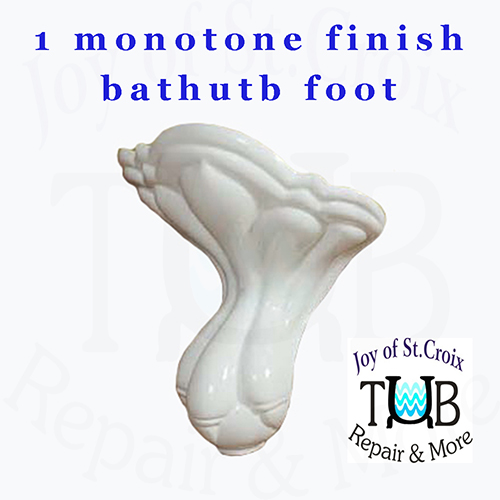
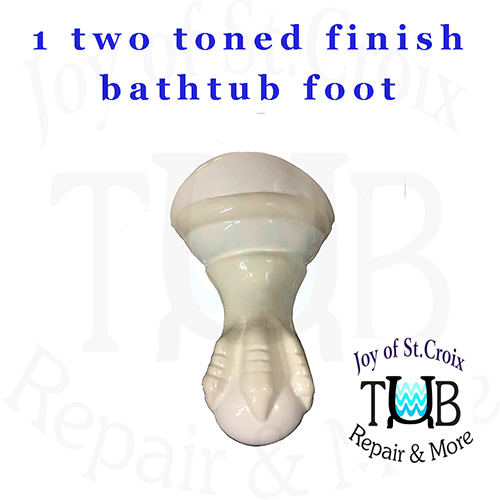


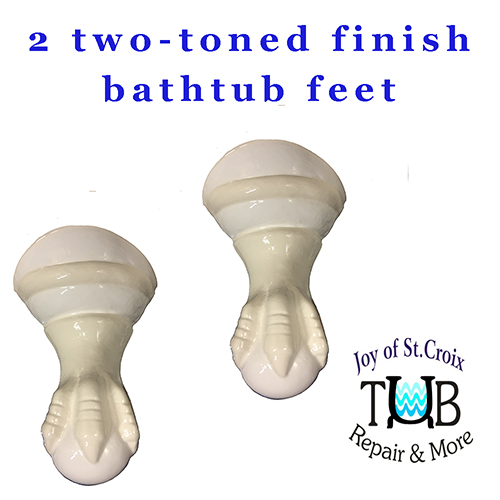
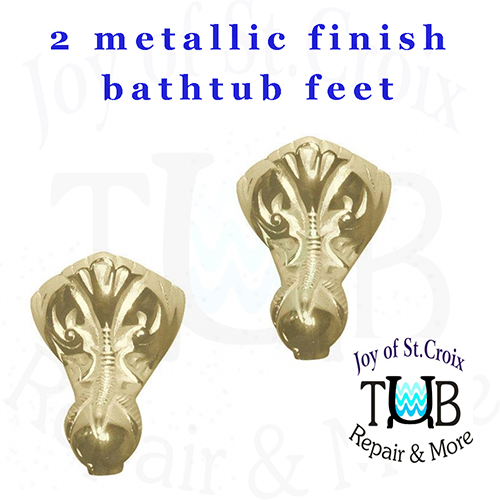
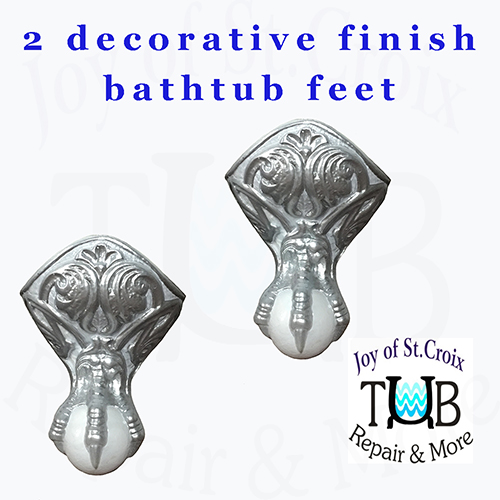
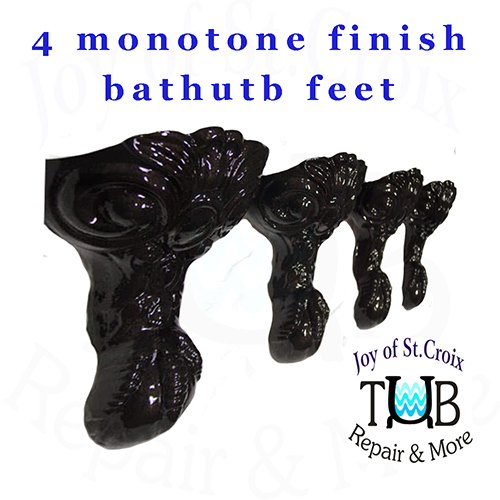
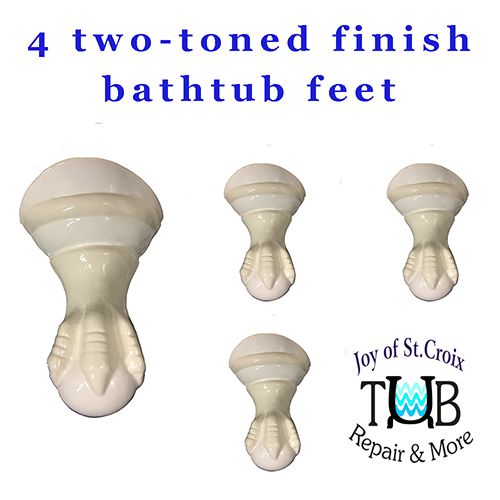

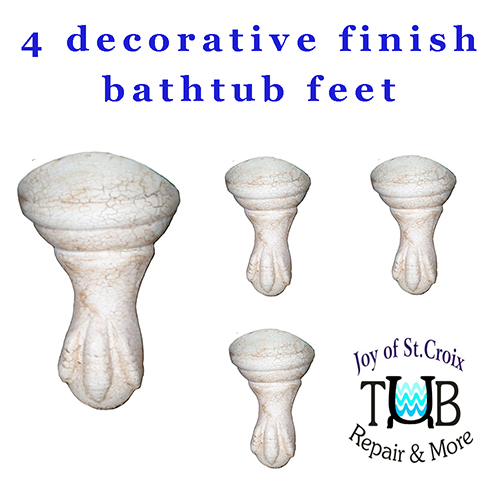
monotone:
Perfectly suited for Queen Anne and Colonial styles where clean lines are sought for, custom match your colour to your design.
two-tone:
Two colours are all that's needed for subtle or bold design.
metallic:
Today's metallic coatings can create multiple effects from chrome and copper to glitters and rainbow prism effects.
decorative:
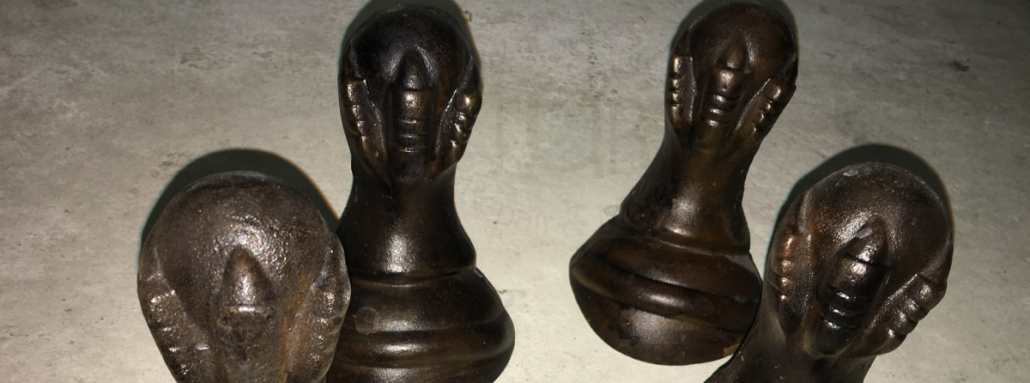
cast iron -
warm texture - a bold look
Oil rubbed cast iron has a unique look that is rarely employed in design because of the nightmare of rust. Joy of St Croix has developed a reliable and cost effective method to abate and eliminate rust growth in order to accent the uniqueness in the castings of individual clawfoot bathtub feet.
Commission a local artist
defining elements
Placing artwork on the interior surface of a bathtub is a bold move, it's best when it's your own move to satisfy your own design desires and you're not just following a fad.

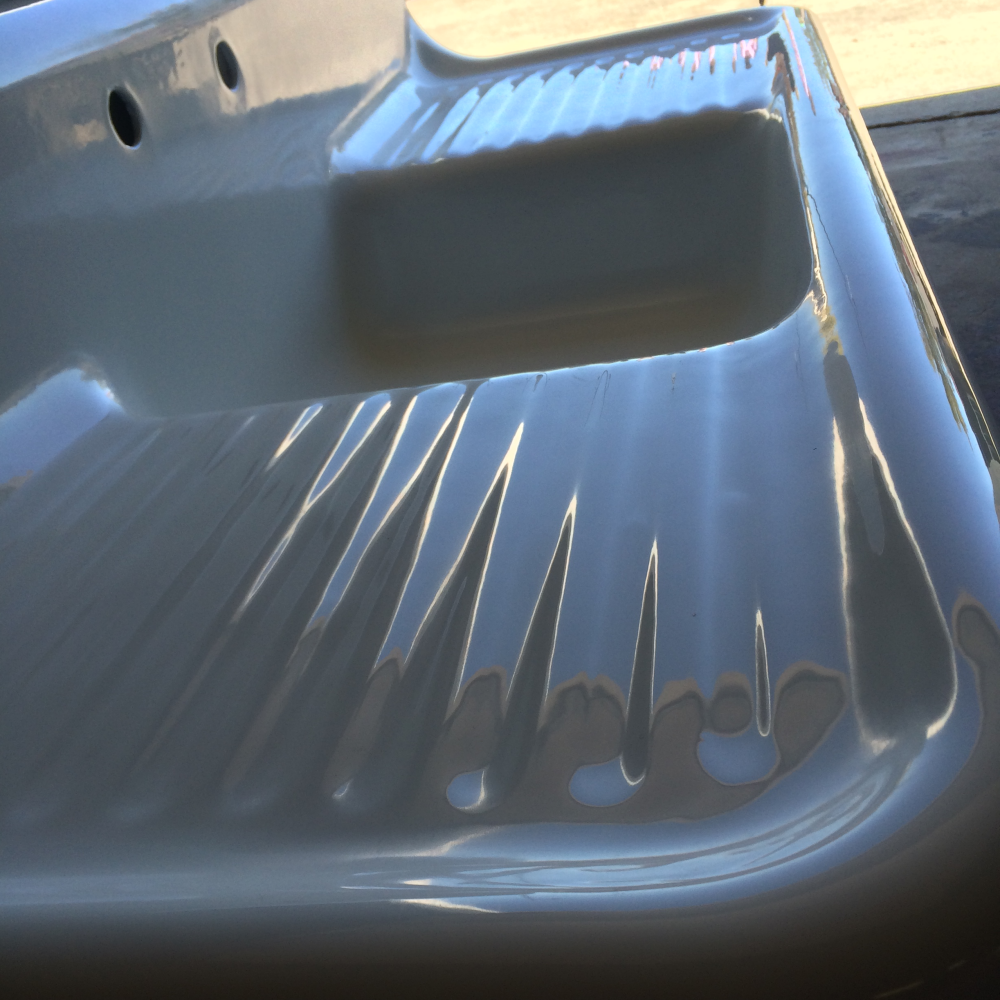


they're your ideas
When you work with a member of the Botteghe Cipolla design team you're the conductor and we play the note when you tell us to. You have an idea and we have to skills to make it beautiful.
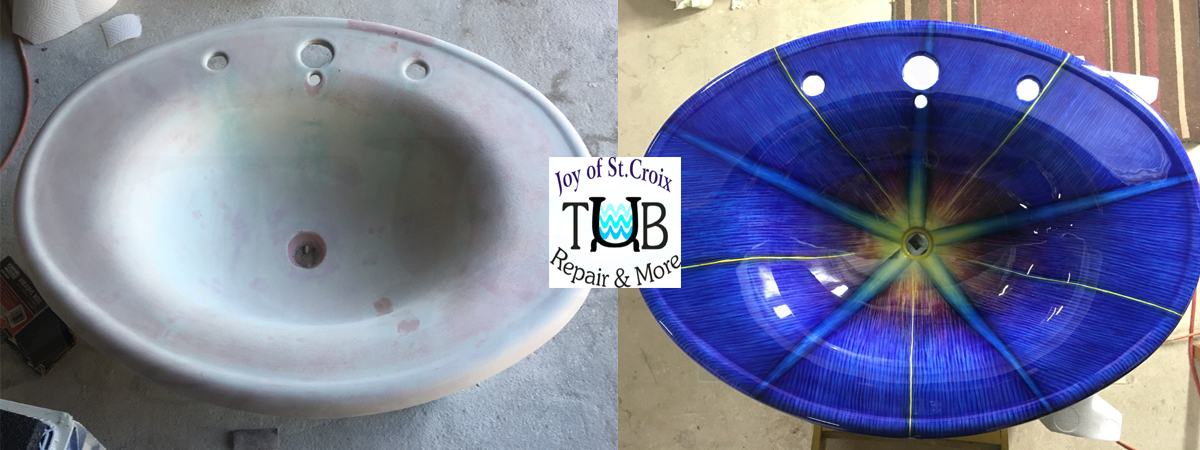
Art Nouveau pedestal sink
~ no overflow ~ pre-code
Some items are too defining of an Art-period to not devote your attention to, like this beautiful Art Nouveau Morningglory Pedestal Sink .
This unique antique pedestal sink was the reason for a property to fail an inspection and be thrown into a dumpster - it has no overflow. Bad news for the original design crew but great news for the person who recognised it as an opportunity to own a one of a kind defining design feature.