
Photo guide to identify bathtub repairs by Joy of St Croix
It's frustrating when you're trying to describe something you've never seen before. Joy of St Croix's simple photo guide assists customers in identifying bathtub repairs.
After identifying your repair by comparing your damage to the examples in the photo guide, proceed to the Estimating Guide to learn how to estimate the price.
3 Types of Bath Repairs

SURFACE REPAIRS
scratches - rust spots - stains - scuff marks on porcelain
Some repairs are only on the topcoat (usually porcelain or gelcoat). Some surface repairs may only be cosmetic and do not effect the performance of the top coat in protecting the structural materials of the unit. Nevertheless, cosmetic repairs are important in encouraging the end-user's maintenance of the unit.

SHALLOW REPAIRS
small to medium chips – gouges – voids – impact cracks
Damage that affects the topcoat without extensive damage to the underlying substrata or structure. The purpose of the topcoat is protection from water damage. A small chip can wick water that will cause rust or rot. Most shallow damage repairs are like fixing a tooth cavity: remove the damage, fill, and topcoat.

DEEP REPAIRS
impact and structural cracks – holes – rebuilds
Damage that affects the substrata or structure that requires extensive removal and rebuilding of material. These repairs require knowledge of the physics and mechanics that effect both the repair materials and the structural integrity. Adequate time must be allotted for deep repairs.
Surface Repairs
Surface Damage Repairs
on Bathtubs and Showers
Some repairs are only on the topcoat (usually porcelain or gelcoat). Some surface repairs may only be cosmetic and do not effect the performance of the top coat in protecting the structural materials of the unit. Nevertheless, cosmetic repairs are important in encouraging the end-user's maintenance of the unit.
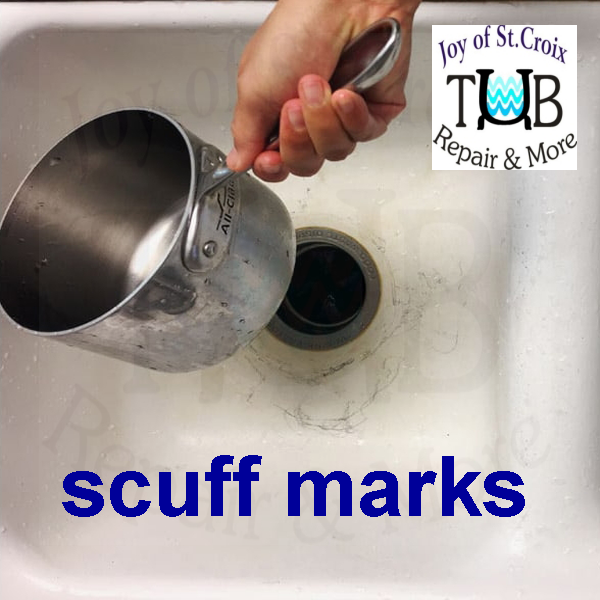
Scuff Marks
porcelain

We think of porcelain as smooth, but microscopically it’s rough. Black marks on porcelain are caused by metal being scraped off like chalk on a sidewalk. To remove it requires some chemistry in order to break the bonds that will allow it to be removed.
Rust Spots
freckles on floor

During the construction process the bathtub is used as a dumping ground and storage unit. Nails, staples, and assorted hardware rust and stains the floor. To remove them requires some chemistry to break the molecular bond in order to remove them.
Chemical Stain

Stains in porcelain are like soap in a sponge, while stains in gel coat are like the cells in a chameleon. Porcelain stains can sometimes be removed, and other times need to be top coated. Purple-ish stains in gel coat are the result of a chemical reaction that can usually be reversed.
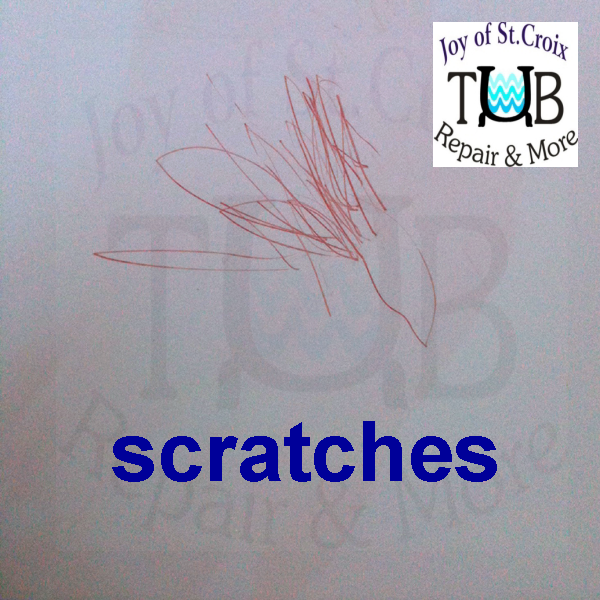
Scratches
gelcoat / acrylic

Scratches are not gouges – the localised area can be sanded down to the bottom point of the scratch and
polished. Polishing reveals what’s under the topcoat and will truly show the importance of “sculpting” the repair. Polishing is the process of making the scratches on a surface too small to be seen, resulting in a reflective surface.
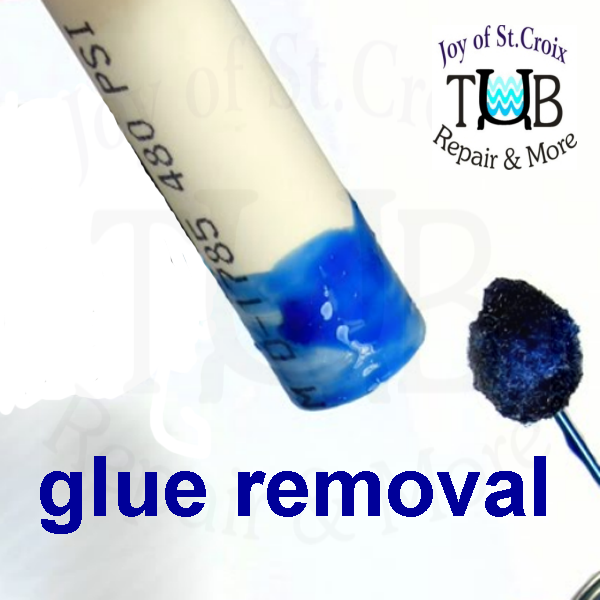
Adhesive / Glue
removal

Plumber’s glue can usually be removed if it hasn’t melted into the finish. When it has melted the finish, it's a shallow repair and treated like a gouge; glue is removed, area is faired and top coated.
Texture
tub or shower floor

A newly refinished bathtub can be too slippery; a non-abrasive texture can be applied with the same material as the new finish and preserve the coating’s integrity. The texture is made of the same material that is used to refinish a bathtub, and can be applied to any surface that can suitably accept our refinishing process, old or new.
Restoring existing textures so that the cosmetics of individual repairs to a bathtub’s floor can stand scrutiny is expensive and time consuming. A new texture can hide a multitude of repairs and is eligible for “component-sale” discount.
Polish - general
gelcoat and acrylic

Polishing is the process of making the scratches on a surface too small to be seen, resulting in a reflective surface. “General polishing” refers to non-complex surfaces that do not require specialised polishing heads. This option is usually reserved for damage caused by inappropriate cleaning with abrasives such as scouring powders.
Polish - panel
gelcoat and acrylic

Polishing reveals what’s under the topcoat and will truly show the importance of “sculpting” the repair. Polishing is the process of making the scratches on a surface too small to be seen, resulting in a reflective surface.
Polish - tub decks
gelcoat and acrylic

Polishing reveals what’s under the topcoat and will truly show the importance of “sculpting” the repair. Polishing is the process of making the scratches on a surface too small to be seen, resulting in a reflective surface.
How to estimate the price
Now that you know what your repair is called you need to estimate the price. All individual services are priced according to the material and labor neede to do the repair. Some extra charges may include trip fees and fixing another company's repair.
Click the button to go to the next page is "How to Estimate Bathtub Repairs".
Shallow Damage Repairs
Shallow Damage Repairs
on Bathtubs and Showers
Damage that affects the topcoat without extensive damage to the underlying substrata or structure. The purpose of the topcoat is protection from water damage. A small chip can wick water that will cause rust or rot. Most shallow damage repairs are like fixing a tooth cavity: remove the damage, fill, and topcoat.
Chip
all topcoats

A missing piece of the finish leaving the substrata sound – usually caused by an impact (e.g., a dropped bottle or tool). The edge of a chip is not structurally sound; it has cracks and fractures that have to be removed to create a solid and reliable bond with the repair. The damaged area is excavated similar to repairing a tooth cavity, filled and faired with marine grade materials, and topcoated.
Note: If the chip seems to have a hollow area behind the broken finish, determine if it’s a void.
Void
gelcoat and acrylic

An air pocket between the finish you touch (gel-coat or acrylic) and the fiberglass structure. A mould in the shape of the bathtub is sprayed with the top coat, then sprayed with the fiberglass. An air-pocket between the layers causes a void which can be revealed by pressure on the topcoat above the void, cracking like an eggshell.
It is repaired by removing the topcoat above the void, which can sometimes be quite larger than what is seen above, filling and fairing the void, and applying new topcoat.
Gouge
gelcoat and acrylic

Similar to a Chip – the topcoat has been damaged, and maybe the fiberglass, but it doesn’t go all the way through the fiberglass structure. It is different from a Scratch in that it is too deep to sand and polish out; it’s repaired just like a Chip – the damaged area is ground out, filled in and faired, and then topcoated.
Crack - impact
all topcoats

An impact crack is radial – it radiates from a center point of impact creating a spiderweb look. It is either a direct impact from the front of the tub, or a reverse impact from behind the tub. These are usually fiberglass structures (resin and fibers are strong, that’s what wood is…resin and fibers) and simply need to have the damaged fibers ground out and new fibers and resin put in. It’s then filled, faired and topcoated.
Defect
gelcoat and acrylic

A composite bathtub is made on an assembly line. A mould in the shape of the bathtub is sprayed with the top coat, then sprayed with the fiberglass, released from the mould, cleaned and repaired the mould marks, and then shipped out of the factory. Somewhere in that process your defect was overlooked.
The moulding defect is treated like a chip repair in most circumstances, because of the similarity in scope and methods.
How to estimate the price
Now that you know what your repair is called you need to estimate the price. All individual services are priced according to the material and labor neede to do the repair. Some extra charges may include trip fees and fixing another company's repair.
Click the button to go to the next page is "How to Estimate Bathtub Repairs".
Deep Damage Repairs
Deep Damage Repairs
on Bathtubs and Showers
Damage that affects the substrata or structure that requires extensive removal and rebuilding of material. These repairs require knowledge of the physics and mechanics that effect both the repair materials and the structural integrity. Adequate time must be allotted for deep repairs.
Special Note
cracks in tub floors
Bathtub floors are constructed like an Oreo cookie; a core sandwiched between two layers of fiberglass. Bathtub floors usually break because of material fatigue and lack of support.
Crack - tub floor
how does it break?
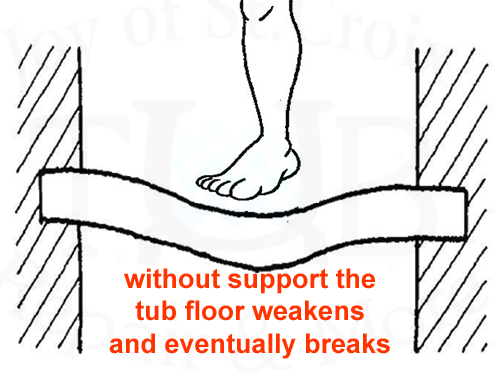
Crack - tub floor
top layer is in
compression


Crack - tub floor
bottom layer is in
tension


Crack - impact
all topcoats
An impact crack usually radiates from a center point of impact creating a spiderweb look. It is either a direct impact from the front of the tub, or a reverse impact from behind the tub. These are usually fiberglass structures (resin and fibers are strong, that’s what wood is…resin and fibers) and simply need to have the damaged fibers ground out and new fibers and resin put in. It’s then filled, faired and topcoated.
Crack - impact
gelcoat - acrylic

An impact crack usually radiates from a center point of impact creating a spiderweb look. It is either a direct impact from the front of the tub, or a reverse impact from behind the tub. These are usually fiberglass structures (resin and fibers are strong, that’s what wood is…resin and fibers) and simply need to have the damaged fibers ground out and new fibers and resin put in. It’s then filled, faired and topcoated.
Crack - impact
gelcoat - acrylic

An impact crack is radial – it radiates from a center point of impact creating a spiderweb look. It is either a direct impact from the front of the tub, or a reverse impact from behind the tub. These are usually fiberglass structures (resin and fibers are strong, that’s what wood is…resin and fibers) and simply need to have the damaged fibers ground out and new fibers and resin put in. It’s then filled, faired and topcoated.
Crack - structural
gelcoat - acrylic

A structural crack is generally linear and is usually caused by lack of structural support or the unit being forced into place. If it was caused by forcing, the damaged area is stabilised from any remaining compression or tension forces and is repaired with marine grade resin and glass cloth. If the crack is on the floor and separates when a person stands in the tub, please reference "Cracked or Broken Tub Floors".
Crack - structural
gelcoat - acrylic

A structural crack is generally linear and is usually caused by lack of structural support or the unit being forced into place. If it was caused by forcing, the damaged area is stabilised from any remaining compression or tension forces and is repaired with marine grade resin and glass cloth. If the crack is on the floor and separates when a person stands in the tub, please reference "Cracked or Broken Tub Floors".
Crack - structural
gelcoat - acrylic

A structural crack is generally linear and is usually caused by lack of structural support or the unit being forced into place. If it was caused by forcing, the damaged area is stabilised from any remaining compression or tension forces and is repaired with marine grade resin and glass cloth. If the crack is on the floor and separates when a person stands in the tub, please reference "Cracked or Broken Tub Floors".
Hole - wall panel
gelcoat and acrylic

A hole in a shower wall is most often an impact, usually caused by a held object or by falling against the wall. A hole in a composite shower wall requires a different repair method than a hole in a tub body, which is why it’s priced differently. The damage is cut out, fiberglassed, blocked, faired and painted.
Hole - tub body
all top coats

A hole in a tub body is most often an impact, usually caused by a dropped object or by placing a chair or ladder in the bathtub. A hole in a composite tub body requires a different repair method than a hole in a shower wall, which is why it’s priced differently. The damage is cut out, fiberglassed, sculpted, faired and painted.
Hole - apron deck
gelcoat and acrylic

A hole in a tub body is most often an impact, usually caused by a dropped object or by placing a chair or ladder in the bathtub. A hole in a composite tub body requires a different repair method than a hole in a shower wall, which is why it’s priced differently. The damage is cut out, fiberglassed, sculpted, faired and painted.
Hole - overflow
all topcoats

Both steel and fiberglass bathtubs are subject to degradation of the overflow. In a fiberglass tub cracks can develop from the tub flexing against the anchored drain pipe; water wicks into the very thin cracks through capillary action and the degrading process begins. To repair it, the damaged area is removed, the surrounding area is cleaned, epoxy-glassed, sculpted, faired and top coated.
Hole - drain
all topcoats

Both steel and fiberglass bathtubs are subject to degradation of the drain. In a fiberglass tub cracks can develop from the tub flexing against the anchored drain pipe; water wicks into the very thin cracks through capillary action and the degrading process begins. To repair it, the damaged area is removed, the surrounding area is cleaned, epoxy-glassed, sculpted, faired and top coated.
Void
gelcoat and acrylic

An air pocket between the finish you touch (gel-coat or acrylic) and the fiberglass structure. A mould in the shape of the bathtub is sprayed with the top coat, then sprayed with the fiberglass. An air-pocket between the layers causes a void which can be revealed by pressure on the topcoat above the void, cracking like an eggshell.
It is repaired by removing the topcoat above the void, which can sometimes be quite larger than what is seen above, filling and fairing the void, and applying new topcoat.
How to estimate the price
Now that you know what your repair is called you need to estimate the price. All individual services are priced according to the material and labor neede to do the repair. Some extra charges may include trip fees and fixing another company's repair.
Click the button to go to the next page is "How to Estimate Bathtub Repairs".
Frequently Asked Questions
~ Bathtub Repairs ~
FAQs from customers
Is the price different between surface, shallow, and deep repairs?
Yes...and no. Repairs are priced by the amount of labor and type of material needed to perform the repair. Scratches are surface repairs and are sanded and polished out. Chips and gouges are shallow damage that are repaired like a cavity in a tooth. Holes are deep repairs that require fiberglass and resin. Visit our page How to Identify Bathtub Repairs for more information.
How do I estimate a price when I don't know how much you charge?
Joy of St Croix publishes our prices based on the amount of damage to be removed and repaired. Visit our page How to Estimate Bathtub Repairs for more information and examples.
Why can't I just call in my order like the other companies?
The purpose of published prices and customer generated workorders is to avoid costly delays caused by mistakes and omissions in the ordering process.
FAQs from Joy of St Croix





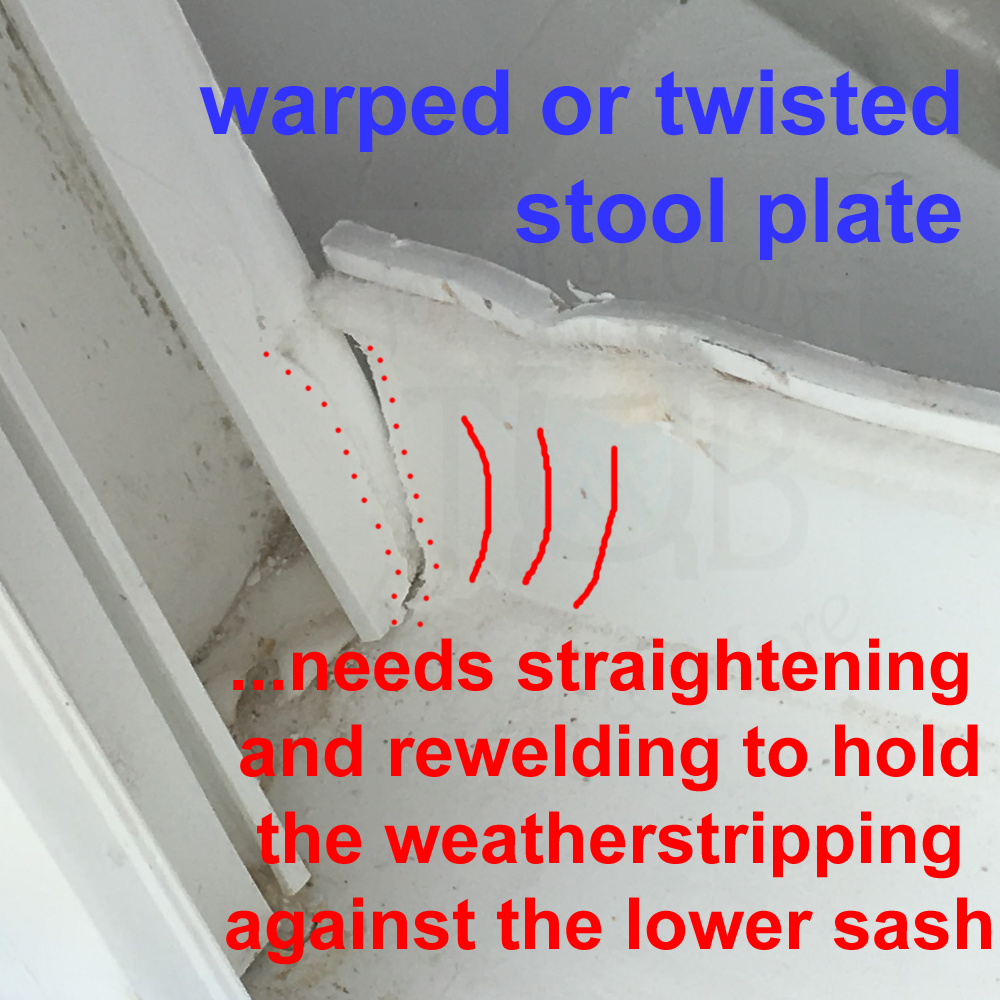
Surface Repairs
Some repairs only effect the surface and do not effect the performance of the window, like scratches or stains. Other surface repairs, like warping of the stool plate's dust trim, do effect functionality and heating and cooling efficiency. Cosmetic repairs are just as important to the homeowner's maintenance and use of the unit as shallow or deep repairs.
$150 – $250
FRAME – warped
Vinyl windows are subject to abuse on a jobsite from the installation of adjacent field materials such as bricks, siding, etc. Warping happens when the window is bent out of shape, usually by the delivery of drywall; the structure is bent back to shape, colour matched and top coated with acrylic urethane if needed.
$150 - $350
DUSTSTRIP - warped
Vinyl windows are subject to impact on a jobsite from drywall delivery through upstairs windows. Dust strips are rebuilt to function as intended; the structure of the repair is done with the same type of vinyl and/or material appropriate for the situation, colour matched, and top coated with UV resistant acrylic urethane.
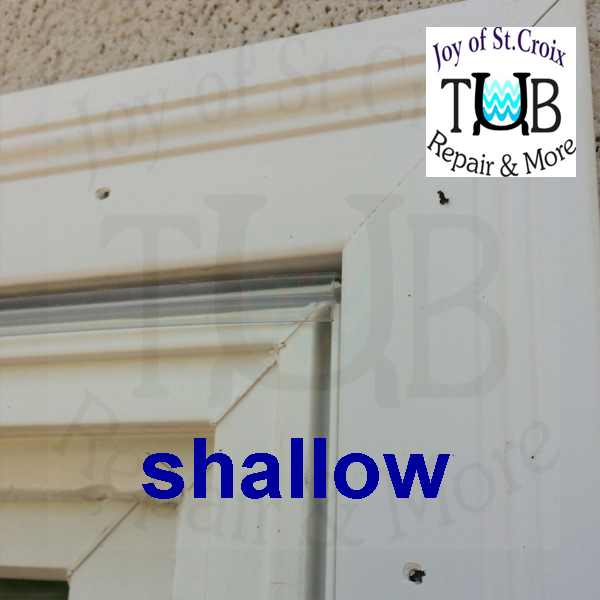


Shallow Repairs
Damage that affects the vinyl without extensive damage to the underlying structure. The purpose of vinyl is long-term protection from weather and particularly water damage. A small hole or crack can wick water that will cause rust or rot to the building. Severe warping is shallow but can limit the functionality of the sash and its efficiency.
$150 - $300
FLAT SURFACES - holes, gouges
Vinyl windows are subject to impact on a jobsite from nails, tools, ladders, etc . Holes and gouges can be rebuilt; the structure of the repair is done with the same type of vinyl, colour matched, and top coated with UV resistant acrylic urethane.
$150 - $350
DUSTSTRIP - crushed or mangled
Vinyl windows are subject to impact on a jobsite from drywall delivery through upstairs windows. Dust strips are rebuilt to function as intended; the structure of the repair is done with the same type of vinyl and/or material appropriate for the situation, colour matched, and top coated with UV resistant acrylic urethane.

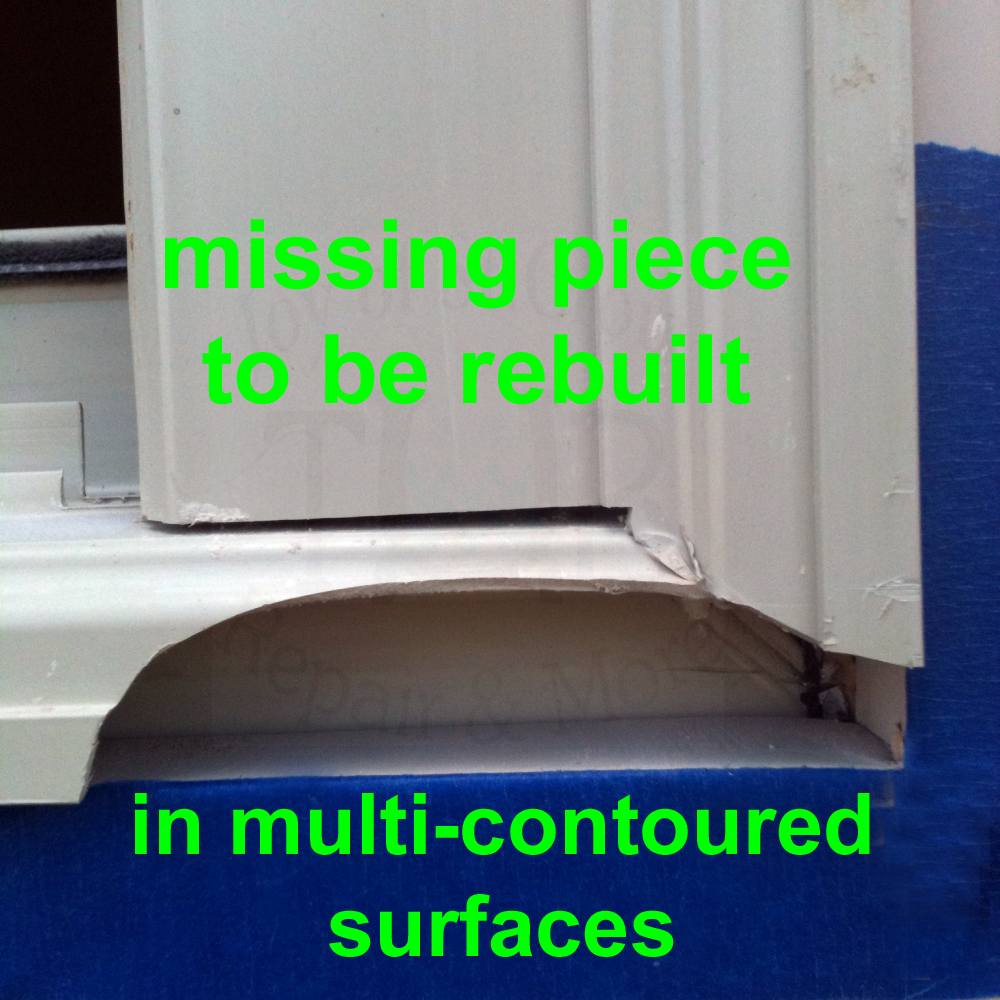
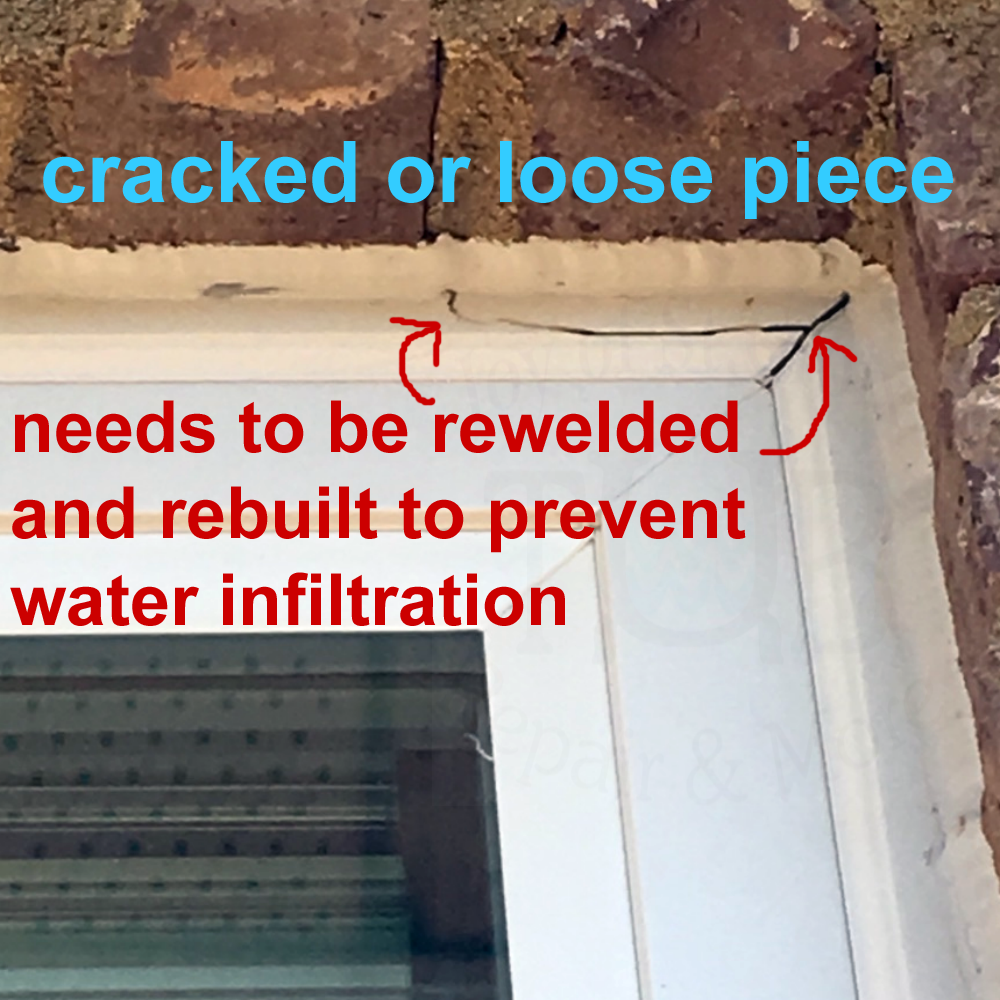


Deep Repairs
Damage that affects the structure of the frame that requires extensive removal and rebuilding of material. These repairs require knowledge of the physics and mechanics that effect both the repair materials and the structural integrity. Adequate time must be allotted for deep repairs.
$175 – $300
FRAMES or STOOL PLATES
– missing pieces
Vinyl windows are subject to abuse on a jobsite from the installation of adjacent field materials such as bricks, siding, etc. Missing pieces can be rebuilt. The structure of the repair is done with the same type of vinyl, colour matched, and top coated with acrylic urethane.
$150 – $200
FRAMES or STOOL PLATES
– cracked or loose pieces
Vinyl windows are subject to abuse on a jobsite from the installation of adjacent field materials such as bricks, siding, etc. Cracks and loose pieces can be re-attached and welded. The structure of the repair is done with the same type of vinyl, colour matched, and top coated with acrylic urethane.
Thoroughly impressed with the outcome of this team’s work. They approach their work with immense professionalism and are meticulous about every aspect of the job to be done. The results are nothing short of a work of art!
https://goo.gl/maps/YiNYCGjF8GaUaxZM9
Extremely professional. Mo did a fantastic job from the very beginning until the end of our bath tub project. We were very impressed by the professionalism and quality of the work.
https://www.facebook.com/pg/joyofstcroixfrontdoor/reviews/?ref=page_internal