
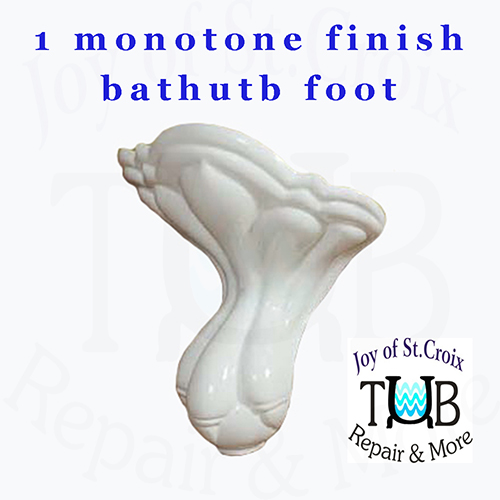

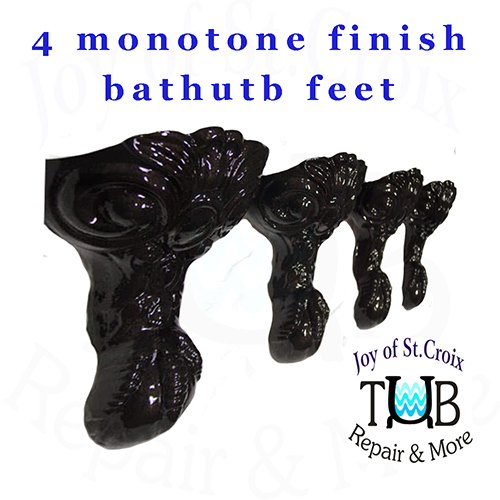


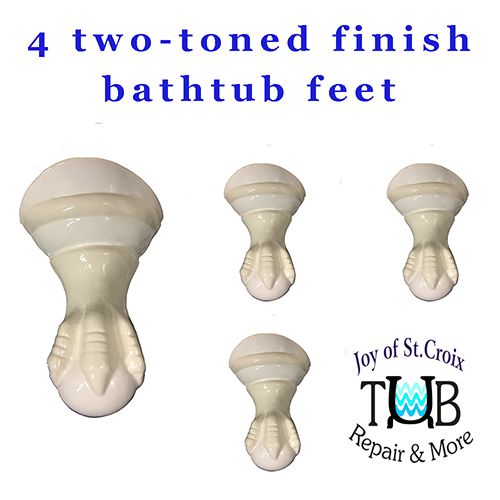

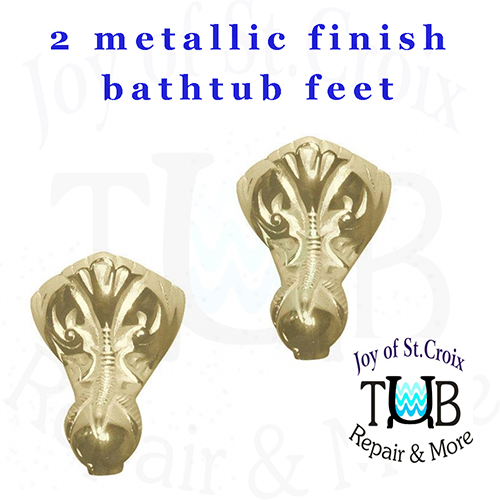


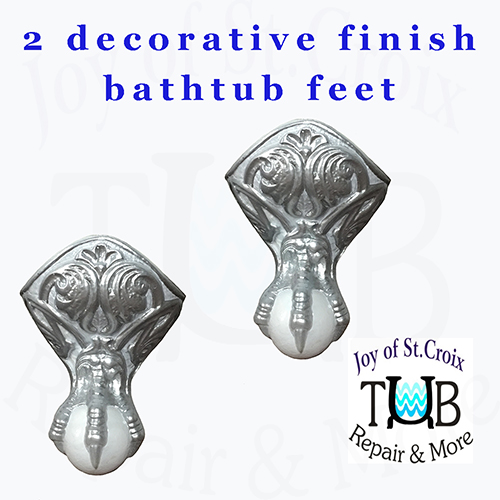

Description

Why do bathtubs have feet?

Customers of Joy of St Croix – Tub Repair and More, in Augusta, GA, are surprised at first to find that restoring an antique clawfoot bathtub is not as straight-forward as they first thought. Not only does refinishing a clawfoot bathtub involve many technical skills including the handling of toxic chemicals and the use of specialty tools, but its Restoration also requires some knowledge of the history of Artistic movements in textiles, furniture, sartorial, and architecture.
Claw feet on bathtubs are straight from furniture design and and an ancient Grecian design – the cabriole leg. Rococo in 18th century France and Chippendale in 19th century England were flamboyant and bold in their use of the claw and ball in their cabriole legs and defined the image of a clawfoot bathtub.
Around this time the Industrial Revolution was giving birth to the indoor plumbing industry and germ theory won’t occur to Pasteur until 1850. Pursuing hygiene was more a class and fashion statement then a norm. This new addition to the home was considered to be a piece of modern technology that was designed with the latest styles and convenience of this new Age of Industry..
And what an industry it was, too. Cast iron radiators, stoves, sinks, bathtubs, tables, and more could all have different leg options for remote purchase and shipping. Mass produced at the turn of the 20th century, the Chippendale foot was toned down to the style typified by American Standard Sanitation Company’s classic model.
A bathtub’s body could be mass produced and shipped and stored in various plumbing warehouses around the world. If the customer wants a special design to the feet that’s not in stock the body can still be purchased and installation could begin while the specialty bathtub feet are being shipped separately.


Reviews
There are no reviews yet.