What's the difference between recoating, resurfacing, refinishing, and reglazing a bathtub?
No practical difference exists between the terms "refinishing" and "reglazing" - they both convey the exact same meaning to the consumer, i.e., reapplying a protective coating to a bathtub.
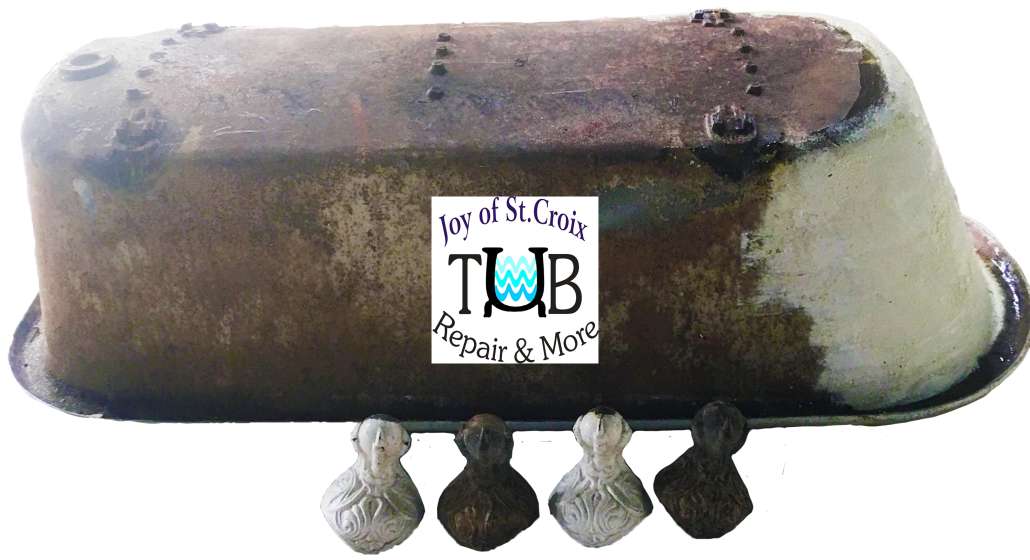
A bathtub is constructed of metal that rusts or fiberglass that absorbs water. A protective coating is applied to prevent degradation of the structure and allow for hygienic cleaning. The protective coating is called the "finish" because it's the last step in production before the surface can be used as intended; the process is finished. If the coating is damaged, a new finish needs to be applied;
it needs to be "re-finished".
To "glaze" comes from the word "glass" and means "to create a smooth glassy-like surface"; like a donut with a shiny coating...a "glazed" donut.
Porcelain coatings have a paper thin layer of glass called a "glaze".
When a bathtub's smooth and hygienic surface is no longer smooth and hygienic, regardless if it's porcelain or gelcoat, a new "glaze" needs to be applied;
it needs to be "re-glazed".
However, since the 14th century, "glazing" has typically referred to cutting, installing, and removing the glass in windows done by a "glazier". Advertising in the yellow pages cost money, and each category you advertise in costs more money. Since customers were more likely to look under "furniture refinishers" or "appliance refinishers" to have their bathtub "refinished", the term "tub reglazing" was pretty much abandoned except as a marketing tool by those who could afford to advertise in multiple areas of the yellow pages to be in front of as many customers as possible.
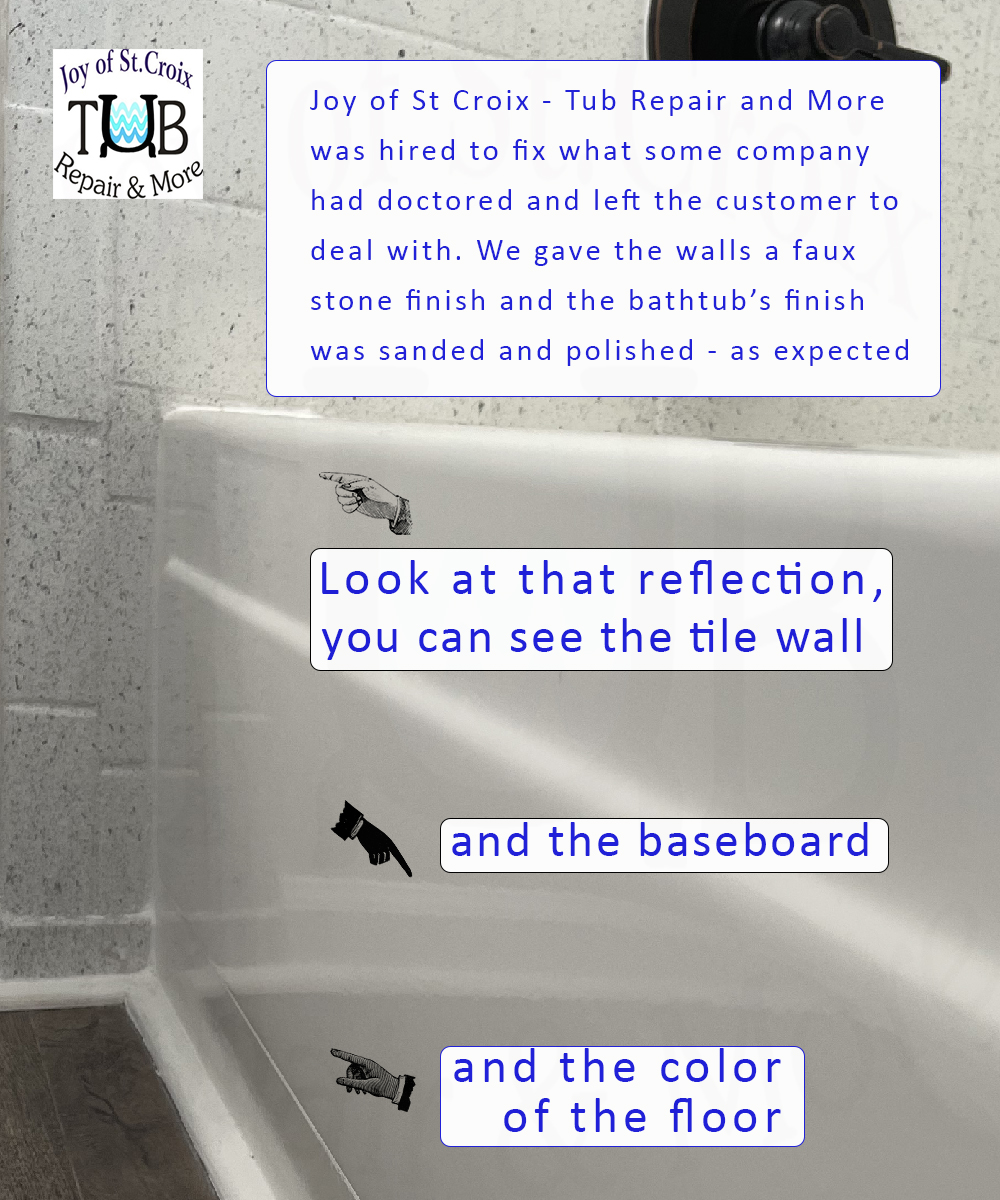
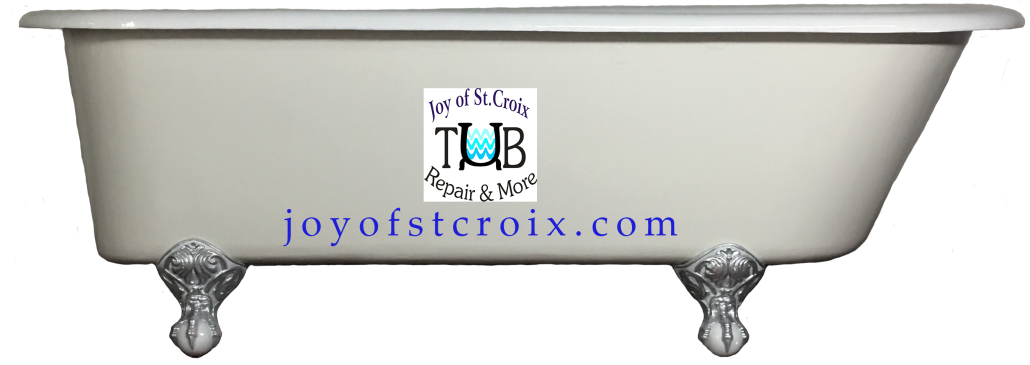
Whether you want to call it refinishing or reglazing, Joy of St Croix - Tub Repair and More sands and polishes the coatings we apply on bathtubs to a mirror-like reflection - every time.